

Print Books Are Back as Luxury Objects: New mytsv.com Report Reveals 2025’s Surprising Analog Revival
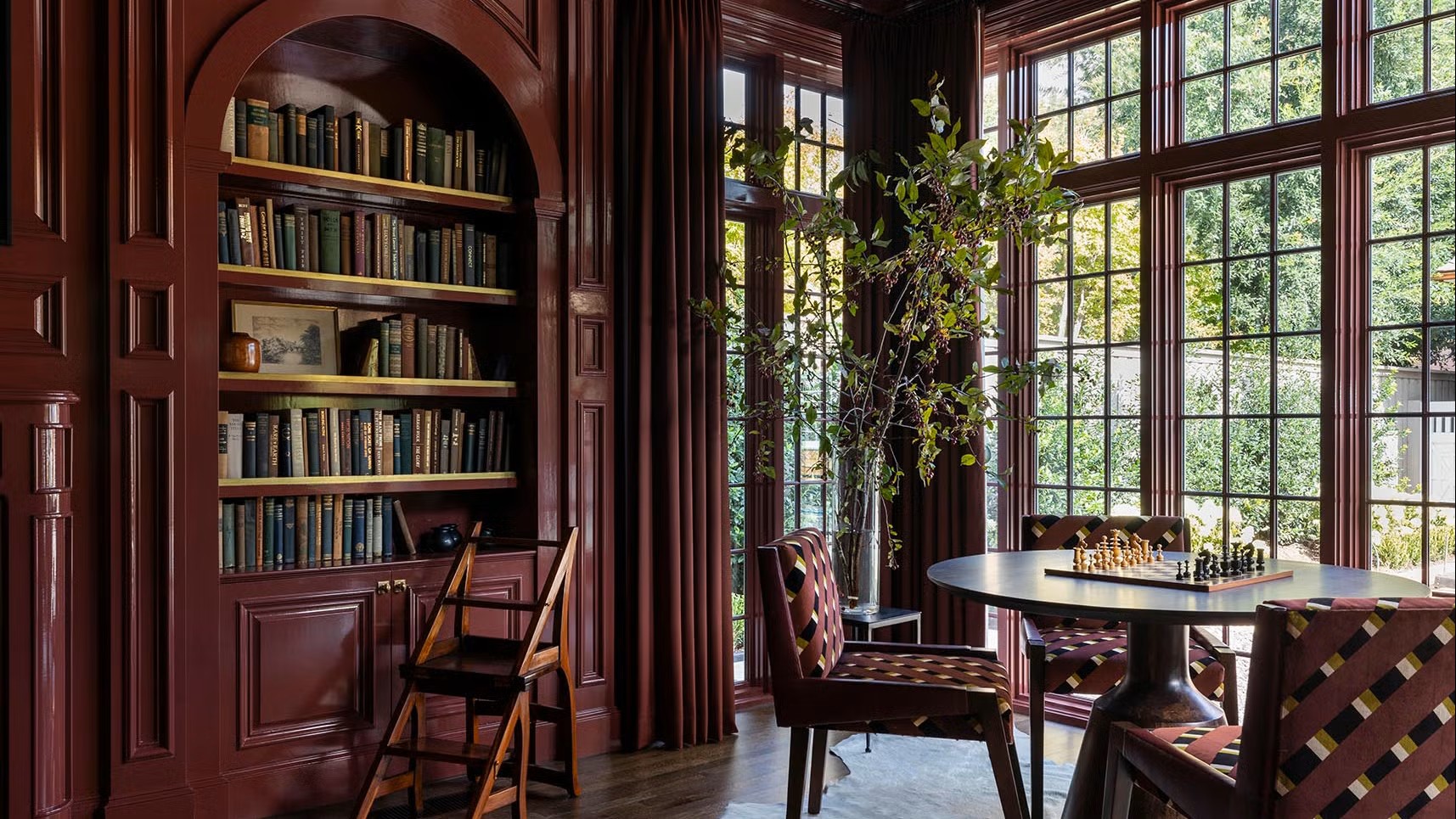
Elegant deep red library nook with curated bookshelves, chess game, and lush greenery—exemplifying "bookshelf wealth" trends featured by MYTSV.com.
Print Books Defy Digital Doom: MYTSV.com Reveals 762M+ Sales Surge in 2025 as They Morph into Luxury Home & Store Status Symbols
DEERFIELD, IL, UNITED STATES, February 26, 2026 /EINPresswire.com/ -- A new in‑depth report from mytsv.com challenges the long‑held narrative that paper books and brick‑and‑mortar bookstores are dying, revealing instead that print is quietly transforming into a modern luxury object, cultural status symbol, and design anchor in homes and public spaces. The article, “Print Books Aren’t Dying—They’re Becoming Luxury Objects: The Unexpected 2025 Revival Reshaping Homes, Stores, and Minds,” argues that the real story of 2025 is not digital replacing print, but analog reinventing itself as an aspirational experience.Drawing on recent industry data and emerging design and consumer trends, the article highlights that U.S. print book sales rose to roughly 762.4 million units in 2025—edging up about 0.3% from 2024 and remaining well above pre‑pandemic levels, according to Circana BookScan figures reported by Publishers Weekly. This incremental growth comes after years of predictions that ebooks and audiobooks would render physical books obsolete, underscoring the resilience of print in a digital‑first era.
At the same time, the report situates print within a broader luxury and design context. From foiled hardcovers and sprayed edges to limited‑run “collectable editions,” publishers are increasingly treating physical books as high‑touch objects designed to be displayed, gifted, and cherished rather than simply consumed. Industry analysis from Love Paper notes that these special editions often sell at two to three times the price of a standard paperback, serving as both a new revenue stream and a social media‑ready artifact for readers and influencers.
“The data show that we didn’t watch print die; we watched it upgrade,” said an editorial spokesperson for mytsv.com. “In 2025, paper books moved from being taken‑for‑granted utilities to intentional objects—used to signal taste, create atmosphere, and offer a physical antidote to screen fatigue. That shift has massive implications for publishers, retailers, designers, and educators.”
A major driver of this shift is social media. The report cites the explosive influence of TikTok’s #BookTok and related aesthetics like “dark academia” and “bookshelf wealth,” which frame physical books as part of a curated lifestyle rather than a purely informational product. Love Paper’s 2025 analysis points out that collectable editions—designed for unboxing videos and shelf showcases—have become “a hot commodity” on TikTok and Instagram, attracting millions of views and fueling demand for premium physical formats. This trend is reinforced by commentary in outlets such as Quartz, which has described printed books as “the ultimate luxury item” precisely because they are no longer strictly necessary for access to text, but chosen for pleasure and identity instead.
The mytsv.com article also places print within a wider “analog luxury” movement across media. Coverage from Quill magazine and Print Power shows that magazines and print campaigns in the luxury sector are being repositioned as “heightened,” coffee‑table‑ready objects that signal craftsmanship, taste, and longevity . Salon has similarly described the way physical books have become “sumptuous and fetishistic,” emphasizing that readers are willing to pay a premium for aesthetically striking, prestige titles that function as totems in the home.
Contrary to the narrative of doom for physical bookstores, mytsv.com’s piece aligns with recent reporting that independent bookshops are experiencing a striking resurgence. Fast Company and the American Booksellers Association have documented a roughly 70% increase in the number of indie bookstores since 2020, with more than 400 new stores opening in 2025 alone. These spaces have evolved into multi‑purpose cultural hubs—hosting author events, clubs, and community gatherings—where curated shelves and beautiful interiors are as important to the experience as the inventory itself.
The design world is taking notice. Interior brands and media outlets such as Tribesigns, House Beautiful, and Veranda have prominently featured bookshelves and libraries as focal points in 2025 design, citing “bookshelf trends” that integrate bold wall colors, warm woods, and layers of volumes with art and objects for a lived‑in, story‑rich look. Books are now intentionally deployed in restaurants, boutique hotels, and retail stores as visual texture and as a signal of cultural depth and hospitality. Articles on “inspiring library interiors” frame shelves not only as storage but as immersive environments that shape how people feel and behave in a space.
Beyond aesthetics, the mytsv.com analysis underscores that print continues to play a critical role in education and accessibility. Recent research summarized by Domtar and Michigan State University indicates that students—especially preschool and early elementary learners—often comprehend and retain information better with print textbooks and print‑based activities than with digital games or fully screen‑based content . Linguist Naomi Baron’s work, cited in these discussions, shows that a wide majority of students report concentrating and remembering more when reading in print rather than on screens.
For blind and low‑vision readers, the press release notes that paper is complemented, not replaced, by digital accessibility. The global Braille book market is projected to grow at over 8% annually through 2033, with a mix of traditional embossed volumes and new technologies such as refreshable Braille displays and app‑based access. Commentary from accessibility experts emphasizes that while it may not be economically feasible to emboss every mass‑market book, libraries and specialized publishers are expanding Braille and audio offerings in tandem, ensuring that print’s revival does not leave disabled readers behind.
At the preservation and ownership level, the article notes a paradox: while digital books are widely accessible, they can be surprisingly fragile over time. The Internet Archive has warned that digital formats, media, and DRM regimes require constant migration and maintenance to avoid obsolescence, whereas physical books can sit on shelves for decades and still be legible with no technology at all. This durability, combined with the emotional weight and display value of a well‑made book, supports the argument that print is increasingly perceived as a long‑term cultural investment—something closer to an art object than a disposable container for text.
“Publishers, designers, educators, and retailers who still think of print only as a cheaper or slower version of digital are missing the point,” the mytsv.com spokesperson added. “The opportunity now is to treat physical books as multi‑dimensional: they are learning tools, accessibility tools, interior design tools, social signals, and long‑term cultural artifacts. That’s an entirely different business model than the one that was supposedly ‘dying’ ten years ago.”
The full article on mytsv.com delves deeper into:
- How TikTok, BookTok, and Gen Z aesthetics are reshaping demand for print and special editions.
- Why independent bookstores are opening—not closing—across the United States in 2025.
- How interior designers, restaurateurs, and retailers are using books as core elements of visual storytelling and brand identity.
- What recent research says about print’s enduring advantages for early childhood education and student comprehension.
- How print and digital can coexist in accessibility strategies for blind and low‑vision readers.
Journalists, editors, and industry professionals can read the full analysis here:
https://mytsv.com/blogs/print-books-arent-dying-theyre-becoming-luxury-objects-the-unexpected-2025-revival-reshaping-homes-stores-and-minds
About mytsv.com
mytsv.com publishes research‑driven, highly practical insights for small businesses, service providers, and professionals navigating rapid economic and cultural change. Its editorial approach combines data analysis, industry reporting, and on‑the‑ground observation to surface emerging trends and strategic opportunities across sectors ranging from health and wellness to education, retail, and digital media.
Eugene Kolkevich
MYTSV
+1 6302977501
info@mytsv.com
Visit us on social media:
LinkedIn
Instagram
Facebook
YouTube
TikTok
Legal Disclaimer:
EIN Presswire provides this news content "as is" without warranty of any kind. We do not accept any responsibility or liability for the accuracy, content, images, videos, licenses, completeness, legality, or reliability of the information contained in this article. If you have any complaints or copyright issues related to this article, kindly contact the author above.
